Monday, November 27, 2006

"Family integrated" worship is nothing new

My friend Scott Brown has an excellent essay posted on Vision Forum's website, titled "My Top Four Favorite Family-Integrated Church Pastors":
The critics of the family-integrated church movement often forget that what we advocate was practiced by some of our most treasured pastors and theologians of the past. The Puritans, for example, enjoyed a rich life of family-integrated worship in their churches. ... Imagine what it would have been like to have heard the voice of Richard Baxter or Matthew Henry or Jonathan Edwards as a babe in arms, then as a teenager, and then as a young man starting out life with a new wife at your side.
Not to mention Moses, Isaiah, Jesus, Paul, ...

Saturday, November 25, 2006

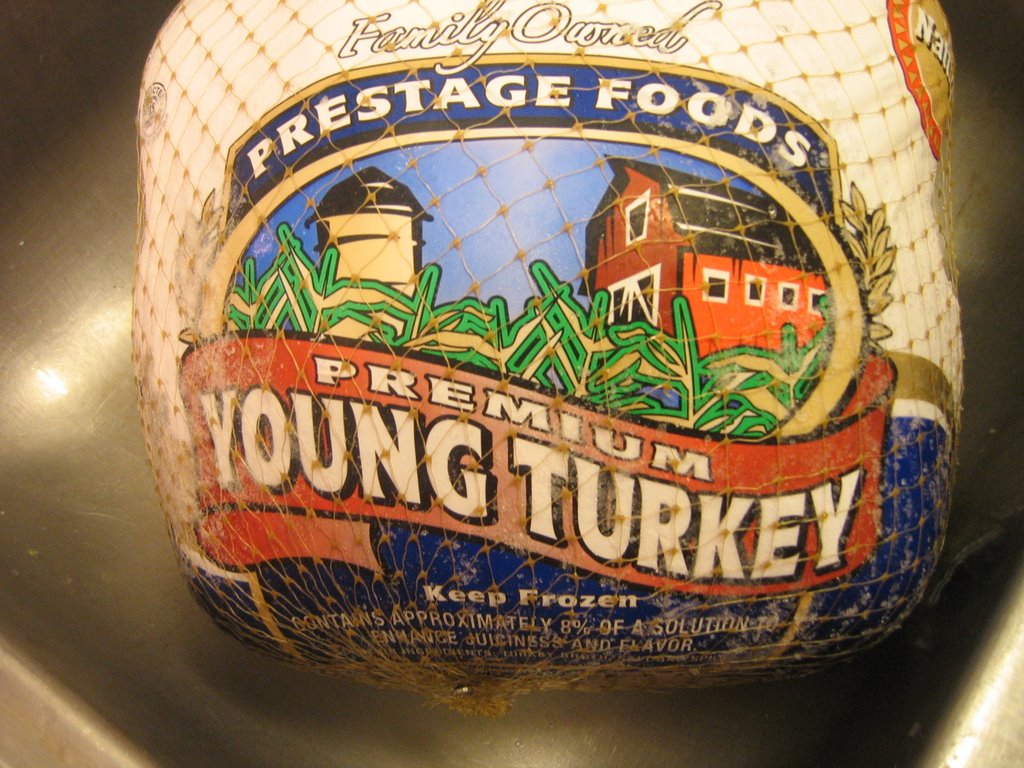
What the Youngs eat for Thanksgiving

Young Turkey, of course.

Tuesday, November 21, 2006

Economic nationalism

An excellent article against "economic nationalism" by Sheldon Richman of the Foundation for Economic Freedom.

Yes, under free trade in a global economy people have to adjust to changing conditions. What's the alternative? Government policies to freeze the status quo in place? If that thinking had prevailed earlier, some of us would be poor farmers and blacksmiths today; the rest would not have been born. Moreover, disruptive change is not something only foreigners can cause. A modern new plant in California can mean unemployment in Ohio. What does the economic nationalist say to that? Do we need trade barriers between states? Why not between cities, neighborhoods, households? If that makes no sense, then we're just arguing about how big the free-trade zone should be. When you trace the principle out consistently, you see that protectionism is no blueprint for prosperity or even security.

The way to minimize the hardship of change is to make sure the
marketplace is free of government intrusion.

The Forgotten Man

Ulrich Zwingli is sometimes called the forgotten man of the Reformation, being eclipsed by Martin Luther to the east and in the next generation, John Calvin to the west. Zwingli was the leader of the Reformation in Zurich, Switzerland, and developed the tenets of his teaching from Scripture, not from Luther. As he pointed out, the fact that he and Luther grasped the same teachings from the Bible quite independently of each other only underscores their common Source.

Jean Henri Merle d'Aubigne was a Swiss pastor and church historian in the early 1800's. He is best known for his tremendous History of the Reformation of the Sixteenth Century (published in five volumes from 1835-1853), a work I read a few years ago. Merle - the latter name was adopted in tribute to his ancestors - wrote that work in a chronological style, so the reader sees the parallel development of the Reformation in several places and several leaders. One consequence, though, is difficulty for the reader to follow a single place or person from start to finish. Mark Sidwell edited the History to extract a very readable biography of Luther, The Triumph of the Truth, and he has done the same for the forgotten Zwingli.

For God and His People: Ulrich Zwingli and the Swiss Reformation is a useful volume but admittedly not as easy a read as Triumph of the Truth. The organization of the Swiss Confederation with its cities, cantons, and city-states sharing the same name, plus the fluid democratic nature of Swiss politics and the entanglements caused by the tradition of Swiss mercenary service, make the situation hard to follow. In Switzerland, while Zurich and Berne were ultimately able to secure a treaty recognizing their Protestant faith, it was from the position of defeat; at the battle of Kappel the Catholic cantons, with much support from foreign troops, decisively whipped the unprepared and poorly manned militias from the Protestant cantons and caused the death of Zwingli himself.

Zwingli is a difficult character in some respects, as well. While he was not the only reformer to confuse the jurisdictions of church and state (the reason, for example, that Anabaptists were treated with such harshness in many places), Zwingli cuts a sharp profile, even starker than Oliver Cromwell, who was much more the soldier and politician. Merle, a Swiss himself, is equally sharp in his criticism of Zwingli's transition from yielding the sword of the Lord to that of man. It is a remarkable providence of God that the Swiss were not totally overwhelmed in a military Counterreformation, suffering the battlefield death of Zwingli and the death by plague of Oeccolampadius shortly afterward; had Myconius and Bullinger not been spared, northern Switzerland may have returned to the papal fold even before the death of Luther.

Some of my ancestors left Zurich to come to America in the mid-1700s, settling in the districts of central South Carolina in the districts opened to German Protestants by the Hannoverian King George III. Two of them were pardoned by the king later, for their participation in the Regulator movement which tried to establish independent law and order when the authorities in Charleston were unresponsive to pleas from the inland back country. One of them later provided supplies and provisions for the Revolutionary effort, and his descendents, very distant cousins of mine, are still active in state politics (though on the Democratic rather than Republican side). I can only speculate whether the villagers who departed from the country around Zurich were the great grandchildren of men who heard Zwingli and Myconius with gladness and maybe had their share in the fields of Kappel as well.

Home again, home again

Many Chinese restaurants in the U.S. have a painting of eight horses, running together in a rolling pastureland. The symbolism was explained to me once and included the fact that eight, in Chinese thinking, is the luckiest of numbers, and something about horses being symbolic of wealth.

Recently I realized that this painting is much like my daily life, which seems to be riding many horses at one time. One day, about Tuesday of last week, I was in Roanoke, Virginia, for an engineering course in connection with my contracting work. After class, I came back to my hotel and made a sales call to a potential customer for our family import business. When that was done, I had supper, then finished writing a review of Facing The Giants for my usual publisher, Carolina Journal.

Thursday I drove back from Roanoke as far as Cary, where I spent the night in preparation for a 6:40 a.m. flight from Raleigh-Durham International to Green Bay, Wisconsin. This was a joint sales call to another customer involved with my contracting work. While we changed planes in Minneapolis, I dictated a revision of my Carolina Journal story over the phone to my wife, Melanie. After we got to Wisconsin, I had to deal with a question from my work with North Carolinians for Home Education.

Friday we flew back from Wisconsin and my family and I drove to our grandmother's house in Union, S.C. Saturday we spent in Easley, S.C., at a board meeting for South Carolina Home Educators; Sunday we returned to Smithfield to pick up a bundle of sample material to show to the customer in Charlotte on Monday. Last night we were back at home.

At one point, I was sleeping in my fourth state in as many days (Roanoke-Cary-Green Bay-Union). I'm looking forward to a few days at home, now, being properly thankful.

Sunday, November 12, 2006

"A positive result of an unhappy memory"

A slightly odd perspective on a phenomenon seen from time to time. I don't know if RWE is a private-sector business or a government agency. Item appeared in "This Week in Germany", November 10, 2006, a publication of the German Information Center.

German Parents Garner Gifts from Blackout Baby Boom

While this weekend's power outage affected more people, other recent blackouts in Germany have had bigger consequences for energy customers. When 82 high-voltage towers collapsed under the weight of snow in Münsterland last November, 250,000 people had to live for days without heat or power during the winter storm.

Fertility agent? Fallen towers in the Münsterland region, Photo, dpa

Nine months later, maternity wards at local hospitals noticed a spike in the number of babies born. A coincidence? Gudrun Fahling of the civil registry in Steinfurt thinks not. "We have about 50 births a month," she told the N-TV in August. "This month, it will probably be 65. It's probably the power outage."

Hospital spokesperson Stephan Schonhoven, on the other hand, is skeptical. "I am very doubtful that the icy cold and lack of food really put anyone in the mood."

The more romantically inclined in Münsterland would prefer to imagine that the power outage did lead to at least a few candlelight conceptions. Not the least of these is RWE, the utility that owned the towers. The energy concern is now giving all the parents who conceived during the outage a gift of 300 euros ($385).

"People had a hard time," said RWE spokesperson Klaus Schultebraucks. "If more children are being born there now, then that is certainly a positive result of an unhappy memory."

Friday, November 10, 2006

A hint of things to come

As a lifelong Republican voter, I have no explanation for the mail today:
Dear Hal Young,

The Democrats need your continued support. That's why we created the Democratic Party VISA Platinum card, an innovative way you can join your fellow Americans to help support Democrats. Every time you make a purchase, you will earn a 1% rebate which you can donate in your name to the Democratic National Committee -- automatically -- with no need to open your checkbook ...
This is wonderfully Freudian. The same week when I cast what was probably my twentieth Republican ballot, the DNC contacts me ("a spirit of bipartisan cooperation", no doubt), encouraging me to go into debt at high interest rates and support the party of retreat with money that I somehow gave up before I ever saw it.

The only thing is I'm not convinced the RNC won't send me the same offer before the week is up.

Wednesday, November 08, 2006

... and the next morning

Checking WRAL's listings this morning, nothing changed, only solidified, since last night.

In the state Supreme Court race, incumbancy carried the night. Sarah Parker defeated challenger Rusty Duke 67-33; Mark Martin held off eccentric challenger Rachel Hunter by the same margin. Patricia Timmons-Goodson, who didn't put out a single campaign sign I can recall, defeated Eric Levinson 58-42. In the one race without an incumbent, Robin Hudson bested Ann Marie Calabria in a much closer result, 51-49.

The same kinds of margins played out in the Congressional races. Incumbent Bob Etheridge (D) retains his seat for another term, handing the Republicans' former 2nd District chairman Dan Mansell a 66-34 loss. Dan only filed for the election the week of the deadline this spring, and only had about $25,000 of funding for a campaign over a district which sprawls across several counties including Nash, Wake, Johnston, Harnett, Wayne, and if I'm not mistaken, parts of Lee County, too. On the other hand, in Lillington, Etheridge's home town, the "Bob Etheridge for Congress" billboard on the highway looked more permanent than the municipal "Welcome to Lillington" sign next to it. Only 18 months until the filing deadline for 2008.

In other Congressional races, the office holders remain, with the exception of the 11th District's Republican Charles Taylor, who was unseated by Heath Shuler 54-46; the 8th District's Robin Hayes (R) is 50-50 with challenger Larry Kissell who trailed by 468 votes at the end of the counting.

The Johnston County School Board races didn't change overnight; the Republicans picked up a seat with Butler Hall, who carried the same 18% of the ballots as returning Democratic incumbent Dorothy Johnson. Larry Strickland was a shoo-in with 24%. Newcomer Brian Hale scored a respectable but not quite adequate 12%. This will give the Republicans a 3-4 minority on the board, not enough to run the program but a welcome boost.

It looks like Jackie Lee is not going to move to the Superior Court after all, though Republican Susan Doyle has won the district attorney's job.

Tuesday, November 07, 2006

A long day ...

Election Day turned into the usual long stretch. We just got back home from the Republican "victory celebration" (admittedly a mixed batch this time) and we're unwinding with email and election returns.

In 2004 I managed to visit about 34 of the 41 precincts in the Johnston County; this year we structured the poll watching a bit differently and I only went to eleven. The rural precincts seemed to be running about 25% turnout, while the town precincts like South Smithfield (our own) and East Selma were 30% or more. Of course, in our area, the fact that three of the candidates on the ballot are neighbors made it something of a personal election. For what it's worth, I did not vote for all three of them.

At this point in the evening, it appears that Bob Etheridge (D) will be returning as District 2's Congressman. Rusty Duke is not doing well in his race for Chief Justice on the state Supreme Court, though Ann Marie Calabria is in a tight race. Mark Martin seems to be reelected but Eric Levinson may be in trouble. Sheriff Steve Bizzell is winning handsomely. It also looks like the Johnston County School Board will have three Republicans this year instead of four; Larry Strickland is well in the lead for reelection, and GOP challenger Butler Hall is holding third out of three, but Democrat Dorothy Johnson looks like a solid second place.

Wife Melanie spent several hours in the rain around lunchtime handing out palm cards with the GOP candidates (especially the officially nonpartisan judicial races ... right); when she came back, the boys took turns in shifts until the polls closed. I don't think our precinct ran more than four hours today without a Young present. My time was spent on the roads of southwest Johnston County talking with polling officials.

Interestingly enough, there were no serious problems reported with people, machinery, or provisional ballots this year, at least not in the precincts I visited. Two things were common to all of them, though -- a higher than expected turnout, and universal disgust with the electronic voting machine reserved for visually impaired voters.

UPDATE 11/08/06 a.m.: Corrected the name of the one Democrat re-elected to the school board.

Sunday, November 05, 2006

Blue moon?

By the way, Senator Smith commented on the so called “Blue Moon” election this year – neither president, senator, nor governor shows up on the ballot this time. I was curious how often this occurred; place mat-doodling suggests it only happens every twelve years, at least here in North Carolina:

2000 – President, Governor
2002 – Senator A
2004 – President, Senator B, Governor
2006 – Blue Moon
2008 – President, Senator A, Governor
2010 – Senator B
2012 – President, Governor
2014 – Senator A
2016 – President, Senator B, Governor
2018 – Blue Moon

For what it's worth, we do have one slight difference from other states -- our state senators are elected every two years, the same as state representatives. There's been a suggestion to change that but I haven't heard much discussion about it.

Food for political junkies

There's an old cliché about “the rubber chicken circuit” for political speakers. I've had my share of mediocre banquet food listening to a variety of speakers, true, and come to think of it, there was a lot of chicken.

On the other hand, there's a lot to be said about true stump meeting feeds. Every region has its specialty to serve when a crowd shows up. When we lived in Louisiana, it was jambalaya or boiled crawfish – really! Growing up in South Carolina, politicians hosted a fish fry, unless the Catholics were involved – the Knights of Columbus had a lock on shrimp boils, somehow. Here in eastern North Carolina, campaign dinners mean barbeque, with plenty of vinegar and red pepper, and fried chicken.

For a “blue moon” election, a year with neither president, senator, nor governor on the ballot, there has been some serious campaigning in local circles. Our state senator, Fred Smith, is an acquaintance of mine, and my family has been to a couple of his local meetings recently (thanks for dinner last night, Senator). Our sheriff is a rising star in the state GOP, and while his challenger this year lost traction as soon as he got out of the driveway, Sheriff Bizzell sponsored The Big Event of the season last week – probably 800 people showed up for copious barbeque and dozens of candidates at Central Warehouse (Smithfield being a historic tobacco market town, no one has to ask what kind of “wares” they housed). The county GOP chairman asked me to let my son know there were plans for, yes, barbeque, at Republican headquarters for Tuesday evening's victory celebration – though word is there will be baby back ribs, too. We passed up several other invitations.

As much as I have enjoyed it, because dearly do I love barbeque and minding not a free meal, I had to identify with the wry comment of another political junkie last evening: “After Tuesday, Mama and I are going to have start going to the grocery store again.” Ah, well. We had leftover chicken and hush puppies, courtesy Sen. Smith, again at home this evening.

A question for fathers

Which is more indicative that one is a parent:

(1) Entering the conference room at work and finding a couple of Legos in your pocket
(2) Finding a blue crayon between slices of bread inside the bag
(3) Deciding you like finding Legos in your pocket, or not being surprised at all to find the crayon (only being curious whether it was a Crayola or one of the cheap ones they give out at restaurants)
(4) All of the above

Answer: Having experienced (1) through (3) myself, I have to say the answer is (4)

Tuesday, October 24, 2006

The Epistemologically Self-Conscious House

Doug Phillips at Vision Forum has made a byword of the phrase "epistemologically self-conscious", meaning intentionally consistent with a Biblical world view in every respect. I first heard it in connection with the San Antonio Independent Christian Film Festival (I haven't been but my son John Calvin has, so I've listened to the CDs).

At the Uniting Church & Family Conference this month, Doug extended the phrase to the home of Scott Brown. I wrote,
He also talked about the Browns' home as an epistemologically self-conscious family integrated home, designed to make a home where kids spend the least amount of time alone in their rooms and the most interacting with grandparents, guests, and their family. “It is a revolving door of evangelism,” he said, where there are always visitors being discipled.
One of my readers asked a question about it, and since I have been blessed to be a guest in Scott's home a number of times, I can offer a bit of first-hand observation.

The Browns live on a beautiful piece of rolling farmland in eastern Wake County, just a short drive out of Raleigh but totally in the country. Their home is affectionately called "The Barn" since the original pre-engineered structure -- it's a steel building, you see -- was designed for that purpose. I have heard different stories about the Browns' original plans for it, whether it was intended to be an actual livestock building or if they intended it as a meeting place for the church Scott pastored, but the slump in the investment market after 9/11 prompted the decision for them to make it their home instead.

Rather, their home in addition. You see, the central space of The Barn is truly a "great room", capable of seating over a hundred without overcrowding, so they still use it for church services as one plan had intended. The Browns have stocked it with Victorian sofas and armchairs, filling in the spaces with inexpensive stackable chairs when needed, so I've been there for several meetings and celebrations of the church. The big room is open to the gambrel roof, probably 24 feet or higher, and features a chandelier made of (simulated) deer antlers, a huge stone fireplace, and a rope swing, of all things. Word is that the children sometimes do get to use it, and at full arc they can touch the wall over the dining table.

The heavy wooden beams and rough stonework are balanced by feminine touches like a framed antique wedding dress, a collection of china plates on the wall, and lace curtains. Scott said the antler chandelier was a gift from a friend and arrived just as he was leaving for a trip. He rejoiced over this manly decoration but had to leave it crated until his return. While he was gone, though, his wife arranged to have it installed -- and hung her teacup collection on the points. Scott said after the initial shock he agreed to only remove some of them, so the "Theodore Roosevelt" effect is still moderated by "Edith" -- there are still a dozen or so cups hanging overhead.

Scott has an office partitioned off with bookshelves in one corner (I've seen the surfboards as well as the WWII invasion map of Iwo Jima), and there are bathrooms, an open kitchen, a parlor, and a couple of bedrooms in the "front end" of the building. On the opposite side of the big room (which feels like about 30x40 feet, though I may be overestimating) there is a mezzanine (think "hay loft") with the children's bedrooms upstairs.

There are many "self-conscious" aspects to this remarkable home. Doug's comment about designing for "family integration" was refreshing in its obviousness and uncommonness today. Anyone who has bought a recently-built home has probably experienced the feeling of a home that was not designed for a vibrant family life. Try doing a big Thanksgiving or Christmas dinner sometime. I have to agree, though; I've never seen the kid's rooms but with all the space and interesting things and people about the rest of the house, I can't imagine there's anything there as compelling as being part of the Browns' extended "family" on any given day.

Sunday, October 22, 2006

Too good to miss

As we pulled into High Point for the International Home Furnishings Market* Friday, we were greeted by the encouraging sign:

FREE MARKET PARKING

and later, another directing us to the

FREE MARKET SHUTTLE

Okay, granted there is much government involvement in promoting and maintaining this twice-annual extravaganza, it was still a pleasant thing to see out in the wild, so to speak.

-----

* Yes, I know the name just changed to "High Point Market" this year but I like the old one. Besides, the convention centers still have signs saying "International". There's a cost to changing corporate identities, you know.

Tuesday, October 10, 2006

Samuel Adams, ever relevant

"If ye love wealth greater than liberty, the tranquility of servitude greater than the animating contest for freedom, go home from us in peace. We seek not your counsel, nor your arms. Crouch down and lick the hand that feeds you; May your chains set lightly upon you, and may posterity forget that ye were our countrymen."

Samuel Adams, 1722-1803

Monday, October 09, 2006

"We know who the enemy is"

When you check Google tomorrow, I expect there will be statements time-stamped within 90 minutes of the event, pointing the pallid finger of indignation at the real culprit:

JOPLIN, Mo. [AP via WRAL)]-- A 13-year-old student wearing a mask and a long, black trenchcoat fired an AK-47 into the ceiling at his school Monday morning after confronting a pair of students and administrators, telling them "please don't
make me do this," officials said.

No one was injured, and the boy, who police said was following a well-thought out plan, was taken into custody.


Hint: It won't be the student.

2006 Uniting Church & Family Conference wrap-up

The 2006 edition of this event is now history and we're back from St. Louis after an all-night, 840-mile drive (eighteen hours and seven states), made much easier by the fellowship of the saints we enjoyed. Special thanks are due to Hope Baptist Church elder Jason Dohm who provided the van and much of the windshield time, assisted on the return trip by church planters Eddie Burroughs and Dan Horn. Sincere thanks to our friend and sponsor for the conference, Scott Brown, Jason's fellow elder at Hope and director of the National Council of Family-Integrated Churches, both for putting together such a great conference and for making our trip possible; may God richly bless you, Brother.

The posts below this are lengthy and Blogger requires some dancing in html to offer compressed posts ("Click here to read more") so I'm offering this as an index. I was not at the Conference as a journalist so I didn't try to cover every speaker and session, but did the best I could with the sessions I needed to hear. Due to a delay en route we missed the opening sessions Thursday but I can highly recommend Voddie Baucham's message for those who may get the CD.

Reports from the 2006 Uniting Church & Family Conference
St. Louis, MO - October 5-7, 2007

Friday, October 6

Alexander Strauch: Biblical eldership

Doug Phillips: The Reformation heritage of this movement

Scott Brown: Why the church should adopt this reformation

Don Hart and Wade Myers: Practical considerations when starting a church

William Einwechter: Should women be permitted to fill the role of deacon?

Panel Discussion: Do family-centered churches slight evangelism?

Kevin Swanson on building ministries of relationship ("Our Greatest Strength")

Saturday, October 7

William Einwechter on the covenantal nature of the local church

Jeff Pollard on the Puritans' vision of family worship

Scott Brown on Biblical thinking for the marriages of our sons and daughters

Closing Panel: Part 1 and Part 2

Caveats: I did my best to record the speakers' thoughts accurately but I'm not a professional transcriptionist. When it was very close, I put it in "quotations", plain text was summarized as we went along, and [my interpolations] are in braces. If you want to reference anything, particularly quotations from books or historical figures, from these postings, I suggest you use my notes only as a reference -- verify the exact wording from another source, or contact the speakers directly. My apologies to anyone who feels they were incorrectly quoted; contact me through the comment field and I'll make any needed corrections.

Update 9:41 a.m.: I looked up Blogger's instructions for compressed posts. Never mind.

Update 10/10/06: Comments on the Conference from Doug's Blog:

Doug Phillips recaps his presentation on the history of the Sunday School movement

Photos from the conference

Alexander Strauch on the plague of talebearing (from his comments in the closing panel)

Voddie Baucham defending the family integrated church model (photos and report)

Saturday, October 07, 2006

Final closing

Second section, Closing Session ...

Phillips: No one seems to continually qualify for elder.

Strauch: ... Maybe there's an extreme where no one is able to qualify. Remember we are all saved sinners, no one perfect, all in the process of sanctification. [There may be other problems in the church, such as perfectionism ... but] Remember 1 Tim 3:1, if you desire this, it is commendable; don't eliminate yourself because you are not perfect.

Phillips: [Describes church situation uninterested in the family integrated model but knowing many community families who desire such; or a church whose new pastor is hostile to their family's homeschooling] At what point do we leave the body, when there seems to be nowhere to go?

Einwechter: We are called to give all diligence to live in peace with all men. When there is godly living and solid teaching, it can be dealt with if you are allowed liberty of conscience to do so. What I'm finding out is that many families are not given that opportunity, they are seen as a threat, so in that situation, we need to ask where God is leading us. The Separatists, when they saw a need for reformation and they were rebuffed, they saw the only alternative was to start again. [Not always, but] Sometimes that is what needs to be done.

Phillips: The concept of honor and respect is important. If you need to leave, you should desire to leave with grace, assuring the elder that you are not going to be a source of trouble, but that your heart is aching to do something different. May I have your blessing to leave and seek that alternative? I think more often than not, a shepherd would prefer to shake your hand and let you go in peace.

Swanson: Whatever you do, you want to live in peace, which is a good thing, but it depends on whether you handle disagreements properly or not. If you are an elder, you have more opportunity to influence elders over time. The larger issue that we miss, we are not about obliterating Sunday Schools, but about returning to relationships, and the modern world is not set up for that. Instead of youth groups and other things, begin to build relationships through hospitality. In many cases, they may never notice if you leave, if the church is that shallow. But try and leave in peace.

Phillips: What do you do with an elder who treats his family unlovingly?

Strauch: It comes back to accountability. If the elders do not confront one another, they lose credibility. The eldership is about confronting; when there has been a family problem with an elder, we ask them why not step aside and deal with it.

Confrontation and dealing with problems right away is the only way. Remember that it the natural tendency with males is not to confront -- [Even President Reagan had this flaw] -- but you need to deal with it.

Phillips: Is there anything you'd like to share for the good of the order?

Botkin: From what I've heard, there has been a very balanced and thorough covering of the things you came to hear. There is probably very good practical information on the CDs ... but I believe the speakers and topics have covered most of the needs of the hour. I think it's a treasure of information that will help us in this transition period. ... We've been talking about Jonathan Edwards, and he said, "I have seen the happy effects of dealing with the souls of the people and the children". That's what we are about. There was a time of tremendous apostasy, just as we are facing now ... [quoted an introduction written for one of Edwards' books about the doleful state of the church before Edwards].

Einwechter: It's been a deeply gratifying experience for me. What has struck me is that reformation takes courageous men and women, and I've had conversation with such. [Relating how one man told him he had to leave a job and face the rejection of his father the past two years], we are talking about courageous men but we have to remember the courageous women, too. [Einwechter had to resign a pastorate over a confessional issue while his wife was expecting] It is the courage of godly women which enables us men to stand. [applause]

Hart: Number one, purpose to understand jurisdiction. We need to ask not just what God said is to be done, but also who is to do it. It is critical, and central to the heart of what we need to get on track today. Who has been told to do what God has said to be done? We must understand proper jurisdiction. I'd also like to build on what Bill just said; if we are to be part of healthy churches, bodies, families, we as a people have to understand honor, loyalty, friendship, and love to one another. We had better embrace maturity ... and purpose ahead of time what kind of churchmen, elders, friends, husbands, wives, and children we'll be.

Strauch: Jerome tells a legend that the Apostle John could no longer speak, but just repeat "Love one another". His disciples asked why, and he said, "Because if you love one another, you will solve many problems."

Swanson: Jesus really loves His bride. At Nancy's wedding last week, what would Chris's response have been if a ruffian of the neighborhood had come in and ripped up her veil, then attacker her with a 2x4. The bride of Christ has been trashed; we have adopted a man-center ethic that has systematically ripped apart the bride of Christ. That's why this is important; we have to love the bride ...

Phillips: Something that has been a tremendous blessing in our congregation has been a revamping and new approach to membership training. We have found 75% of the problems are eliminated by proper, pre-memberhsip training. When someone joins our body, they become a member of our family. We explain to them, you have to affirm before the body the duty of the people in the local church and sign a statement. [During that time], we go through our expectations of you, and your expectations of us; here's how you leave, so you know now ... if you join here, you need to understand we are not going to release you into nothingness. Here are our priorities, our approach to preaching, the procedures to hold me [the elder] accountable. We ask if you have any problems or issues with members of this congregation that are outstanding and unresolved; you must resolve them before you join, and if you can't we need to know so we can deal with it. Are there things about doctrine or practice that bug you? Let's put everything on the table right now.

People who are schismatics don't join. People who don't want to say to your face that they don't like your doctrine don't want to stay. It forces men to be reponsible and open, and to face expectations in advance.

[When you join a church] you are joining a body ... you should take steps to be a peacemaker.

If you like the work [of the National Center for Family-Integrated Churches], I would formally ask that you pray for us ... as a missions outreach to the churches of America. ... that God will help, protect, guide, chasten us ... I am soliciting your help for that.

Brown: I was very affected by the questions we received because most of them had to do with different challenges to love in the church. It is always challenged because "the greatest of these are love" ... so this is our challenge, particularly critical in the church. How many of you are not in churches now which are not consistently in tune with these principles [about a third of the audience raises their hands]. My most prominent thought right now is the preservation of love between brothers in the church, and how that's accomplished in transition times.

[Tells story of a pastor calling about his struggles] This man never once made a deriding comment toward the deacons, people, or philosophy of his church; he was grieved at the thought he might have to separate. Instead of coming in and trying to rip the church apart with these different philosphies, he went to his deacons and resigned. He told them he loved them and expressed the love of Christ to them; he understood that God is sovereign over all things.

I want to see more ... [guys like him] among us. At the same time, there are hills to die on. You know, there are some unintended consequences to ideas, like I was talking about Gideon this weekend ... When you tear down your father's idols -- and there are idols associated with the principles we're discussing here -- often there is a backlash, and the backlash challenges love. In times like these we need to listen so carefully to the Apostle Paul in Phillipians 1:27, "Only conduct yourselves in a manner worthy of the gospel of Christ." Let's exalt the gospel in all that we do and say. It has a way of destroying all pride in a person. Anyone who understands the gospel knows how bankrupt we are before God; and in the midst of our bankruptcy, that we would continue to ask Him for understanding how to destroy the idols in our heart and land, but in the mercy of our Lord Jesus Christ.

Doug Phillips closes the meeting with "a vision of hope", lavishly illustrated with the wedding of Peter and Kelly Bradrick -- almost as powerful in retrospect as it was to witness.

Closing Session

Doug Phillips remarks that the weekend has included twenty three different sessions. This will be a panel discussion with most of the presenters at this weekend's event: Alexander Strauch, Kevin Swanson, Don Hart, William Einwechter, Geoff Botkin, and Scott Brown (Dr. Baucham has already headed back to Houston). The following are as exact as I can transcribe them, but caveat reader.

Phillips: Can we have a simple biblical definition for gossip?

Strauch: Everyone has a burr under their saddle about something. Mine is people passing information around without the facts. Mr. D. E. Host who took over the China Inland Mission after Hudson Taylor said, "The greatest problem we have in this mission is talebearing ..." I can't tell you how many times in our local assembly I have heard [stories without basis] ... No judgment without the facts. Remember what the Scripture says about an elder; you're not even to entertain a report without witnesses.

Einwechter: In the church, gossip is sharing a prayer request about someone you're concerned about. An excuse is the skin of a truth, stuffed with a lie; that's what gossip is.

Botkin: What we use with our children ...: If a person would think less of a person after hearing it, that's gossip. A five year old child can understand that ... Private communication that does not belong or need to take place. There are places and times, jurisdictions and people, that need to deal with these things, and reports that need to be made, to the right people at the right time. But private whispering is not the right time or place to communicate these things.

Brown: There are normal sanctification problems, quirks, poor judgment; then there are egregious sins. When there are egregious sins, then there is a process to be used (Matt 18). But the principle of love covering a multitude of sins comes into play ...

Swanson: Perhaps a broader definition is unedifying conversation. My encouragement to my flock is to be a "building-up" kind of flock. How is this building up my brother? Me? The one we are talking about? ... [But often] they don't want to build up ... to love. ...

Phillips: How long should a gossip matter last after it's been taken to the leadership, and if it continues over many months, what should the individual or congregation do?

Brown: Titus 3:10 says to reject a factious man after a first and second warning, then this category of relationship called, "rejection".

Phillips: What if it simply is not addressed? I confess a challenge we have every single month there is some mild to very serious issue that needs to be addressed. There may be a half-dozen building up at any given time. ... You can't imagine the responsibility on leadership to work through problems and not to rush through it. ... Problem 1, leadership needs to act, but Problem 2, if you are not happy with their action, [how do you respond then?]. But what do you do if your grievance simply isn't being dealt with by the leadership?

Strauch: If you are in a position of leadership, you have to handle these things. If you don't, you lose credibility and authority with the congregation. I think the congregation learns to have confidence in their elders, and it lets the flock rest. If they don't have confidence, you hurt the whole flock and the leadership. I think the important thing is a lot of good communication. [Often] the elders are not communicating well. [Scandals have to be communicated to the congregation but questions directed to the elders] Deal with them right away; the faster you put the fire out the better.

Phillips: If you are grieved because you think a particular shepherd is not acting properly, you need to give your leader the benefit of the doubt, and if they don't deserve that, is that the right place for you to be? And so, you should walk up to the leader and ask, respectfully, [what progress is being made]. I think wise elders should also be willing to say if you have a fundamental grievance but are willing to work things out, we can bring in other men of the congregation ... it may be possible for leadership to become myopic -- though I wouldn't go there quickly. I think most loving leadership will be willing to work with you.

Strauch: We are told to esteem leaders very highly in love, triple intensive -- there is always conflict between leaders and followers. ... I find in the local church, if you will be a good listener and try gently to explain yourself, the thing will generally go away. People just want to be heard. But the gentle approach does work; most things subside after that [when people realize you will be reasonable with them].

Botkin: A kind of grievance that does not build confidence is grumbling. It can develop to the point confidence in the leadership is destroyed for no reason. Elders need to be careful to keep a lid on this. The grumblers [against Moses] were not grumbling against him but against God. Elders need to discern between that and a legitimate grievance.

Hart: It builds confidence when the flock knows that leadership takes gossip seriously, won't tolerate it, and will deal with it. Left unchecked and unaddressed, it will eat a church alive.

Phillips: When the gossips have left, it's like being born again as a body. When they left, it was like everything changed. That's why the Bible is clear, to get them out [if you can't help them]. At Vision Forum we have a maxim that there is only one unpardonable sin at Vision Forum; you are allowed to punch your brother in the face but not to talk about him behind his back. ... That's why we take fencing lessons. Men are able to knock each other over, get up and shake hands, but let that wormtongue out, this will destroy your life.

Body life is so fragile, one gossip can wreck your life and your family.

Scott Brown: Biblical thinking for the marriages of our sons and daughters

A few weeks ago my family was privileged to share the wedding of Scott's daughter Kelly to Peter Bradrick, a young man we had met through his work on the staff at Vision Forum. The ceremony and the subsequent feast -- yes, an actual wedding feast in the best ancient tradition! -- were Christ-centered and full of joy. Scott talks about that courtship and marriage in addition to broad principles below.

Scott opened discussing Calvin's Geneva. Under Calvin, they outlawed celibacy of the clergy, Roman Catholic laws about marriage and divorce were repealed in favor of Biblical models, and laws were enacted on matters from courtship and marriage to separation and dealing with broken engagements. There was an explosion of marriage, and people were traveling from all over Europe “to get in on the action”. Scott recommends an interesting book, Sex, Marriage and Family in John Calvin's Geneva, by John Witte and Robert Kingdon, which he said incorporates material and documents only uncovered in recent years.

The central portion of his message was based on Abraham's securing a wife, Rebekah, for his son Isaac. Abraham sent his oldest and most trusted servant to find a wife for his son, giving him specific instructions, a careful process, and taking a solemn oath. Compare that to the random process and absence of counsellors or guiding principles in the normal marriage pattern in college today. Criteria outside of our own feelings are almost not considered today.

Read this passage slowly (Gen 24) and consider why Abraham was so careful. Marriage is about so much more than just a couple. Isaac was Abraham's only hope for posterity. What is needed in the church today is powerful and principled thought about the importance of marriage.

Four marks of marriage making today: random engagement instead of strategic engagement; [the second I missed]; individualistic inclinations and passions instead of seed conscious thinking; romantic methodologies instead of principled methodologies.

Look, he said. Matthew Henry points out, “When he came to seek a wife for his master, he did not go the playhouse or the park, and pray that he might meet one there, but to the well of water, expecting to find one there well employed.” Do the math – how long would it take to water that many camels? He was looking for a woman with a heart to serve and work hard.

“Young people need help getting married, particularly in the culture we live in.” We have a whole generation of thirty-something women in the church who have not been encouraged and helped to be married. Al Mohler has an article on his website telling church leaders to urge their young people to get married. This was the ethic of Calvin's Geneva.

Rebekah has a good disposition and she is industrious. Scott said we have to urge men, do not raise picky, prima donna daughters. Train them to serve imperfect men and go to the ends of the earth to suffer what they suffer and help them through life.

Notice that this was an arranged marriage but not a forced marriage. Scott said he sees no evidence in Scripture for forced marriage, unlike the practice Calvin encountered and opposed in his day, when families would commit their infant children to future marriage, never consulting them further as they came of age.

Gen 24:60 – What a testimony of a spirit harmony with God's design. The brothers aren't allowing for a fling of childlessness or a time of career building, but of fruitfulness. Scott called for the young men under 15 present to memorize this speech and send out their older sisters with such a blessing. Rebekah seems to have the same spirit as Isaac's mother Sarah, too, being willing to leave home and follow her husband into the unknown.

Application:

  • Follow the best aspects of this example. Adam, Isaac, and Jacob, all had some peculiar circumstances which don't translate into modern days!
  • Parents ought to enter into the process of marrying your children
  • Bring the best resources to bear for the finding of mates for your children
  • Be affected by the trustful, worshipful, thankful childlikeness of Abraham's servant
  • Pray for the maririag of your children
  • Trust in God for providential meetings

Some personal thoughts about the process:

  • I believe Scripture applies to every aspect of courtship and marriage
  • I believe patterns of dating are fraught with destructive elements
  • I don't believe there are airtight biblical formulas to guide every part of the courtship process. There is diversity of application and flexibility in the process.

I hold five unbreakable principles for courtship in our family

A. The couple must honor parental authority and responsibility. Fathers are the head of sons and daughters. Suitors are not allowed to woo my daughters w/o permission, and not then until I'm convinced of the wisdom of moving forward. My sons are not allowed to court a young woman until I'm convinced that he is ready. I want to avoid premature twitterpations. The couple must be able to cheerfully place themselves under my timelines and requirements

B. Wise counsellors must be consulted and they should affirm the marriage. Gen 24, Pr 15.22

C. A process of screening is necessary to establish equal yoking and compatible values (2 Cor 6.14) There are questions to be asked and information to be gathered.

D. The couple should have passion for the marriage and not be forced into it. (Gen 24.67). This was a core principle in Calvin's Geneva. People will have different views of romance, both too much and too little.

E. Purity must be maintained. (Col 3.5)

I believe the reformation of the church in its discipleship methodologies is critical for biblical marriage formation.

Questions to ask yourselves

Are you in the process of becoming long-term thinking Christians, like Abraham? Kingdom oriented and principle driven? Working on a plan for your children's marriage?

Are you living a local church neglecting lifestyle? Some in the homeschooling movement don't have space in their life and heart for local churches and they become a throwaway. When you don't love the local church you have serious problems; many people are more picky than God about fellowship. There are heartbreaking practical implications as well, such as not having the relationships that you should have – not just about courtship but about fellowship within the Body.

Are you living an age-segregated lifestyle? How many of your friends are younger than you, and appropriate ages for future mates for your children? Are you calling boys into brotherhood, not just letting them run wild? Are you a friend of young men and women in the church? Make it your aim to be a godly resource to young men in the church, don't just wait until your daughter turns twenty and start looking.

Are you a marriage mercenary or a godly brother? When your daughter turns that age you tend to become a mercenary. If you have no other relationships with other younger men, you can be forced into that role. Perhaps you have not been a disciple maker like you should be. It's worrisome if a family becomes instantaneously hospitable. I would tell a young man to be cautious about accepting a dinner invitation from a family with daughters over sixteen. We must treat young men in a brotherly and honest fashion.

Have you unreasonably kept your child from marriage? By being too picky or too passive? Calvin took men to court, the Consistory, for being too picky in an ungodly way. It does happen!

Young men: Are you in the game? Press for early maturity and early accomplishment. Throw off the chains of childishness or foolishness.

Thoughts on courtship and marriage

Keep your minds on kingdom purposes – all thoughts should be on the Biblical purposes of marriage.

How important is attraction and twitterpation? Courtship is the best time to see whether that happens.

The opportunity for misunderstanding and miscommunication are massive. Almost nobody defines courtship the same; get it defined clearly. Ask the hard questions.

For the Browns, there are three phases to the process:

Inquiry – Father listens to acceptable inquirers and qualify candidates.

Courtship – A time of more formal relationship. The couple has the freedom to end it at any time. It is specifically exploratory. Ends in engagement.

Engagement – In Calvin's Geneva, you were only allowed to be engaged six weeks.

What did we do with Peter and Kelly? Two years of observation, visiting families at great expense and cost in time. Sometimes you have to take 200 hundred camels and go 500 miles to figure this thing out. I probably traveled 20,000 miles with Peter so I'd know him well. I had a list of specific topics to see what he thought – including examining the history on his computer.

Consider how long you have left before you need a husband or wife for your child?

What should I do if I don't know anyone suitable for your child? Move or build relationships, either locally or around the country.

Like Abraham, we have a responsibility to our sons and daughters to help them.